 By admin
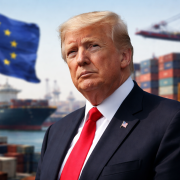
The past year has produced an unusual sight in global trade, mainly due to Trump’s protectionist policies.
And just like that, agreements that had been stalled for a decade or more are suddenly moving fast, while countries that once relied on the US to anchor the system are spending political capital to build alternatives.
And the catalyst of course is a change in how the United States uses trade power under Donald Trump.
Tariffs are no longer only about imports and exports. They have become tools tied to loyalty, alignment, and leverage, and the rest of the world is responding accordingly.
When tariffs stop being about trade
Trump’s second term has made one principle clear. Trade agreements with the United States are provisional.
Since mid 2025, the US administration has expanded or threatened tariffs not just over subsidies or deficits, but over security cooperation, energy ties, and now territorial questions.
The July 2025 EU-US trade deal illustrates the pattern.
Europe accepted a 15% US tariff on most of its exports in exchange for removing duties on American industrial goods.
Not even half a year later, the agreement is now under strain as Trump widened steel and aluminium tariffs and warned of new levies tied to his Greenland plans.
That threat is the beginning of a new phase where tariffs are no longer connected to market access.
They are tied to support for Denmark’s sovereignty over Greenland.
European lawmakers reacted by moving to halt ratification of the deal and openly debating the use of the EU’s anti-coercion instrument.
In a joint statement released on January 18, the leaders of Denmark, Finland, France, Germany, the Netherlands, Norway, Sweden, and the United Kingdom said the following:
“… Tariff threats undermine transatlantic relations and risk a dangerous downward spiral. We will continue to stand united and coordinated in our response. We are committed to upholding our sovereignty.”
This shows that trade access can be withdrawn over politics unrelated to commerce, so every agreement carries a political risk premium.
Europe builds outward while hedging inward
Europe’s answer has been two-fold. On one side, it has hardened its internal tools. The anti-coercion instrument, designed but never used, is now part of the live discussion.
On the other hand, the bloc has pushed hard to lock in external partnerships that reduce exposure to US pressure.
The clearest example is the EU-Mercosur agreement.
After 25 years of talks, the deal with Brazil, Argentina, Uruguay and Paraguay was finalised in January 2026 despite protests from farmers and opposition from France and others.
Some estimates suggest that the long-term GDP gain could reach up to 0.7% for Mercosur and about 0.1% for the EU.
But the strategic effect is far more significant.
The pact creates a market of roughly 780 million people and gives Europe trade coverage across almost all of Latin America, far more than either the United States or China.
The timing is not accidental. US tariffs on Brazilian goods reached 50% during disputes last year.
Europe’s leaders described the Mercosur deal as a statement of strategic autonomy.
In practical terms, it secures access to food, industrial markets, and critical raw materials such as lithium and manganese at a time when Chinese export controls and US tariffs are both sources of risk.
India’s moment and the logic of speed
India has also become central to this reordering. In January, New Delhi and Brussels prepared to sign what would be the EU’s largest trade agreement by population.
Agriculture is excluded, a choice that would have been unthinkable a decade ago.
For India, US tariffs on certain exports have climbed as high as 50%. Talks with Washington stalled last year.
The EU deal offers tariff relief and legal certainty for sectors such as pharmaceuticals, autos, textiles, and services.
Indian textile exporters currently face EU duties of up to 16%, while rivals like Bangladesh benefit from preferences.
For Europe, India is a counterweight to over-reliance on China and a hedge against US volatility. The deal prioritises speed and scale over perfection, but it also reflects something more.
In a system where access can be withdrawn quickly, countries are willing to accept narrower agreements if they lock in predictability.
Canada and China choose pragmatism
Canada’s recent reset with China shows how this logic applies even to close US allies.
Ottawa and Beijing agreed to slash tariffs on electric vehicles and canola, unwinding retaliatory measures that had driven Chinese tariffs on Canadian canola seed as high as 84%.
Under the new arrangement, Canada will allow nearly 50,000 Chinese EVs a year at a 6.1% tariff, while China cuts canola tariffs to about 15%.
The deal diverges sharply from US policy, which maintains steep barriers against Chinese EVs. Canadian officials framed the agreement as a return to predictability.
China is Canada’s second-largest trading partner, with bilateral trade above C$130 billion in 2024.
They’ve also shown increased interest in buying oil from Canada.
With US tariffs again in play and rhetoric hardening, Ottawa chose diversification over alignment.
A system reorganising itself
Taken together, these moves point to a global system that is reorganizing.
The United States remains the largest single market and the biggest source of imports for Europe.
No deal with Mercosur or India replaces that. But something is bound to change.
Countries are no longer waiting for the US to stabilise trade policy. On the contrary, they are building dense networks of agreements elsewhere to insure against US reversals.
Regional blocs are gaining weight. Legal frameworks are becoming deeper outside the US.
Bilateral pragmatism is replacing ideological alignment when tariffs threaten livelihoods.
And the Greenland episode makes things more intense. When tariffs are tied to sovereignty and security choices, accommodation stops working.
Europe’s willingness to suspend its US trade deal while finalising one with South America captures the new calculus.
Leverage still works in individual negotiations. Over time, it encourages partners to look for other anchors.
The world is not turning against the United States, but it is pricing in uncertainty. Trade used to be governed by slow rules and predictable disputes.
Now, it is treated as a field of power.
US “allies” are moving quickly. Perhaps quicker than Trump is. Agreements that sat idle for years are in motion.
Countries are standing closer together, and perhaps that is out of necessity.
The post How Trump’s protectionism is making the rest of the world great again appeared first on Invezz