 By admin
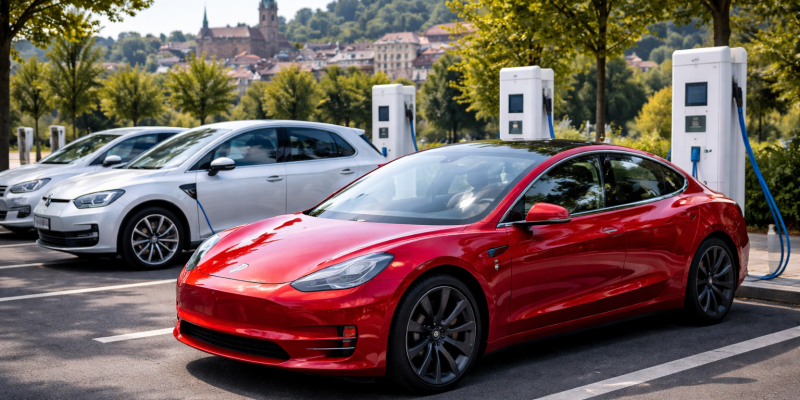
Tesla’s footprint in the European Union car market narrowed in January, even as battery electric vehicles strengthened their position across the bloc.
Industry data show the US electric vehicle maker recorded a sharp year-on-year decline in registrations, losing market share as the broader shift towards electrification continued.
The figures reflect a mixed start to the year for Europe’s car industry.
Overall, new car demand weakened, yet electric and hybrid models accounted for a growing share of registrations.
Against that backdrop, Tesla’s drop in sales stands out, highlighting intensifying competition within the battery electric segment.
Registrations fall
Tesla registered 8,075 new cars in the EU in January, compared with 9,733 in the same month last year.
That represents a 17% year on year decline, according to data released on Tuesday by the European Automobile Manufacturers’ Association.
As volumes fell, Tesla’s share of the EU market slipped to 0.8% from 1.0% a year earlier.
The decline came during a month when total new car registrations in the EU dropped 3.9%, signalling softer demand across the region.
Although the broader market contracted, the composition of sales continued to shift.
Battery EV share rises
Battery electric vehicles increased their market share to 19.3% in January, up from 14.9% in the same period last year.
The data underline growth in fully electric cars, even as economic conditions remain uneven in several EU member states.
Hybrid electric cars retained their position as the most popular powertrain, capturing 38.6% of registrations.
This kept hybrids ahead of battery electric vehicles in overall share, reflecting strong consumer interest in electrified models that combine electric and combustion technology.
Meanwhile, petrol and diesel cars continued to lose ground.
Their share declined further as buyers moved towards lower-emission alternatives.
Divergence in key markets
Tesla’s weaker performance contrasted with robust battery electric vehicle growth in major EU markets such as France and Germany.
These countries remain central to the region’s automotive sector and often set the tone for broader trends.
The rise in battery electric registrations in these markets suggests demand for fully electric cars remains solid.
It also indicates that growth is increasingly distributed across a wider range of manufacturers.
European carmakers have expanded their electric line-ups and increased production capacity.
As more models enter the market, competition in the battery electric segment has intensified.
Competitive landscape shifts
The January figures illustrate how Europe’s transition to electrification is progressing on two fronts.
Overall car demand cooled; at the same time, electrified vehicles are taking a larger slice of the market.
Hybrid cars remain dominant, while battery electric vehicles are steadily increasing their share.
Within this evolving mix, Tesla’s registrations declined both in volume and market share terms.
Data from the European Automobile Manufacturers’ Association highlight a more crowded electric vehicle landscape. While battery electric adoption is rising, it no longer guarantees gains for any single brand.
As 2026 begins, the EU market shows continued momentum towards electrification alongside intensifying rivalry among manufacturers.
The post Tesla registrations tumble in EU as battery EV share climbs appeared first on Invezz